Refractive lens exchange
RLE as an alternative to progressive lenses

This procedure is currently only available at our Swiss sites.
The RLE method is a refractive lens exchange in which the natural lens of the eye is replaced by an artificial lens. The procedure may be an alternative to progressive vision in the case of presbyopia, higher farsightedness or certain defective vision, but it must be carefully weighed as any operation.
In the RLE process, the natural lens of the eye is removed and replaced by an artificial lens, a so-called intraocular lens. The procedure is technically similar to a modern operation of the cataract, the difference is mainly the reason for the operation: In cataract surgery, a clouded lens is replaced; in the RLE procedure, the correction of defective vision and presbyopia is paramount.
Many people between 45 and 65 notice that their viewing habits are changing. The arms seem to be too short when reading, small font is more strenuous to read and at some point a simple pair of binoculars is no longer enough. For some patients, however, an operative procedure is also an option: refractive lens exchange, often internationally RLE (Refractive Lens Exchange) or CLE (Clear Lens Exchange).
For the correct classification is important: RLE is not an eye laser procedure on the cornea. It does not change the shape of the cornea like a Femto-LASIK, but replaces the natural lens, which loses its elasticity over the course of life. As a result, the procedure can be of particular interest to people for whom presbyopia already plays a central role in everyday life.
RLE stands for Refractive Lens Exchange.
The procedure is aimed at humans from about 40 to 60 years old, in which presbyopia, farsightedness or high defective vision noticeably influence everyday life.
The natural lens is replaced by an artificial lens, which is calculated and manufactured individually beforehand on the basis of accurate measurement data.
Monofocal, multifocal, trifocal and EDOF lenses pursue different visual objectives and bring different compromises.
Any intervention in the interior of the eye carries a residual risk, including infections, inflammation, retinal complications, lens misalignment, residual vision and light phenomena.
A serious decision can only be made after a thorough preliminary examination in which the cornea, lens, retina, optic nerve, tear film, pupil size and visual needs are assessed together.
Presbyopia arises because the natural lens becomes firmer with the years and can no longer adjust sufficiently to near, screen distance and distance. A progressive lens compensates for this loss; in a refractive lens exchange, the aging lens is replaced by an artificial lens with a planned visual profile.
Presbyopia, medically called presbyopia, is a normal biological ageing process. At a young age, the natural lens is soft and elastic, it can change its shape and thus focus light sharply on the retina for different distances: this process is called accommodation.
The natural lens is biologically less mobile in presbyopia:
A laser on the cornea can correct nearsightedness, farsightedness, or corneal curvature, but it does not make the natural lens elastic again. For this reason, Femto-LASIK may be a suitable option for many younger people with stable defective vision, but it does not save them from presbyopia.
In the case of a refractive lens exchange, the natural lens is removed because it can no longer adequately afford accommodation. In its place, an artificial lens is used that, unlike a natural lens, neither ages nor clouds: a later cataract can no longer arise on this lens.
The choice of artificial lens is one of the most important steps in a refractive lens exchange: there is not the one best lens for everyone. Each lens solves a particular vision problem particularly well and brings with it other compromises.
Through a detailed and comprehensive investigation, we clarify together which lens type is the best choice for you.
In refractive lens exchange, monofocal lenses, multifocal or trifocal lenses, EDOF lenses and toric lenses are mainly used. The decision concerns not only the desire for glasses freedom, but also contrast perception, night vision, halos, screen comfort and the question of whether the use of reading glasses remains acceptable.
The natural lens is replaced because it has lost its elasticity with presbyopia and can no longer focus sufficiently close. A laser can correct the defective vision on the cornea, but cannot make an aging lens move again: The aging process is not reversible, therefore, in RLE methods, a lens exchange is used.
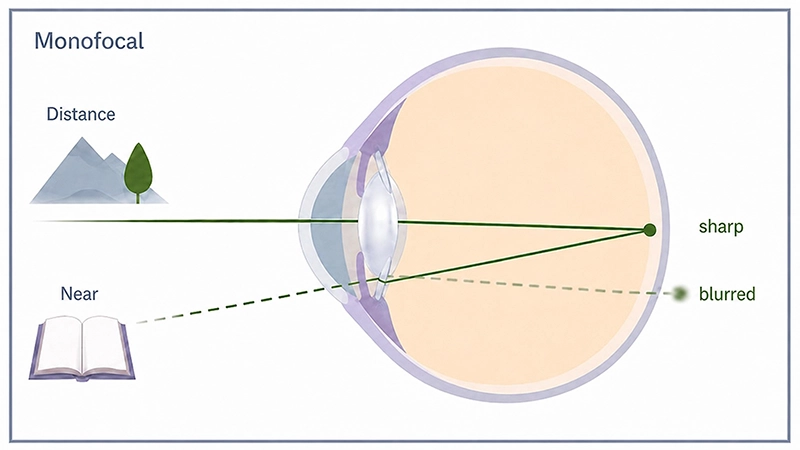
A monofocal lens has a main focus. It is often calculated in such a way that the distance is as sharp as possible. Many patients still need reading glasses or glasses for intermediate areas, such as on the screen. The advantage of monofocal lenses lies in their optical simplicity: they do not divide the incident light into several focal points and thus contrast perception and night vision often least affected. For people who, for example, drive a lot at night for work, have very high contrast vision requirements or have retina, optic nerve or cornea irregularities, a monofocal lens may be the safer choice.
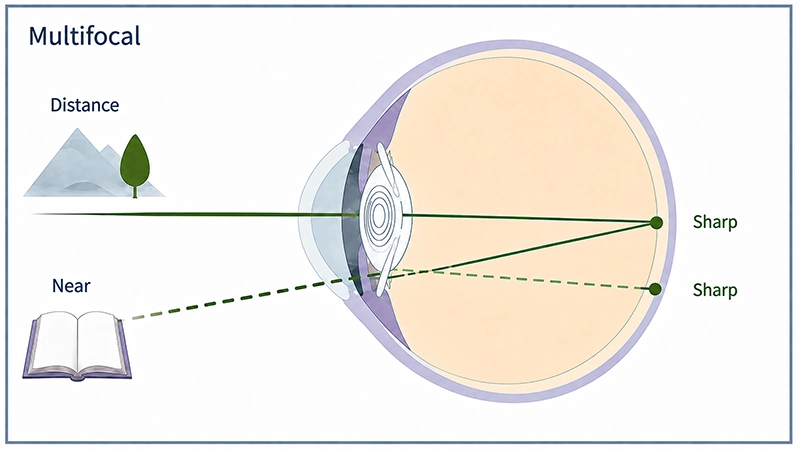
Multifocal and trifocal lenses distribute the incident light over several areas of view. The goal is to reduce the dependence of glasses or contact lenses in distance, intermediate area and close proximity. For many people, this is attractive in everyday life, especially if they find the progressive glasses to be disturbing.
The price of this extended viewing range is visually relevant: because light is distributed across multiple focal points, contrast perception may be weaker than with a monofocal lens. In addition, halos, glare, light rings, star rays or shadow images can occur, especially in the dark and around light sources. Many people get used to it over the course of the first few months, but not all perceive these phenomena as secondary.
Therefore, a multifocal or trifocal lens is not automatically the more modern or better choice. It is a choice with a certain objective: to be as free as possible from visual aids, but to accept possible losses in contrast and night vision.
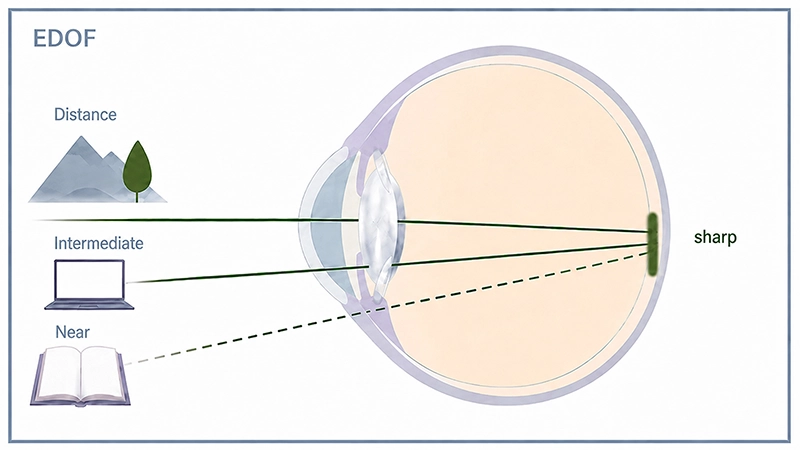
EDOF stands for extended depth of focus, i.e. an extended depth of field range. These lenses try not to create several separate focal points, but an extended range of vision. Often the focus is on distance and intermediate area, for example, driving a car, computers, everyday life in interiors and orientation in space.
Compared to classical multifocal or trifocal concepts, EDOF lenses can cause less disturbing light phenomena in suitable eyes. At the same time, the near vision for very small font or long reading is not always as strong as with trifocal lenses. If you plan an EDOF lens with a monovision (one eye is optimized for far vision, others for the intermediate area and the vicinity), a large degree of freedom from eyeglasses can be achieved. EDOF lenses are not an uncompromising alternative either: depending on the design and manufacturer, contrast perception can also be influenced.
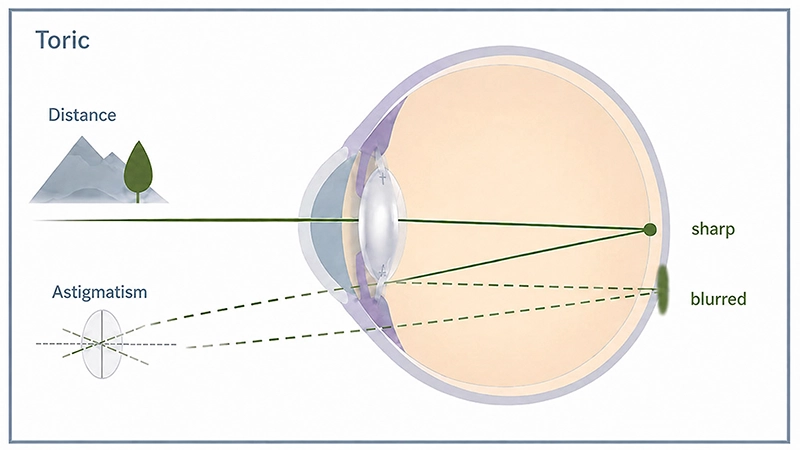
Many artificial lenses are also available as a toric variant, they also correct a relevant corneal curvature. This is important because even a well-calculated lens does not achieve the desired result if a pronounced astigmatism is not taken into account. Toric lenses can be combined with monofocal, EDOF or multifocal concepts.
| Lense type | Main goal | Typical compromise |
|---|---|---|
| Monofocal lenses | Very clear vision at a typical viewing distance, often at a distance | In most cases, glasses are still needed for close-up or intermediate distances |
| Monofocal monovision or micromonovision | One eye stronger for distance, the other slightly weaker for close-up or intermediate distances | Not everyone can cope with the difference between the two eyes equally well |
| Multifocal or trifocal lenses | Greater freedom from spectacles for distance, intermediate and close-up vision | Frequent halos, glare, reduced contrast sensitivity, longer adaptation time |
| EDOF lenses | Extended field of vision, often covering both distance and intermediate ranges | Close-up vision may remain limited; contrast and light phenomena depend on the model |
| Toric lenses | Correction of astigmatism | Precise measurement and a stable lens position are particularly important |
Refractive lens exchange can be useful, if presbyopia, higher farsightedness,
beginning lens changes or a strong dependence on glasses everyday life
significant loads. The procedure is often less suitable for very young, still clear lenses, increased retinal risk, relevant eye diseases or unrealistic expectations of complete glasses freedom.
The RLE procedure can be interesting for people in whom the presbyopia not only occasionally disturbs, but also clearly determines the reduced visual quality in everyday life. Typical are patients who do not cope well with progressive vision goggles, often have to change several glasses or additionally have relevant farsightedness or nearsightedness. Anyone looking for "lens swapping instead of progressive eyeglasses" or "sightedness surgery" on the internet should not only think of comfort, but also of the medical suitability of the eye.
Particularly carefully, a refractive lens exchange is tested in people younger than about 50 years.
are. At this age, the natural lens is often still relatively clear and partially flexible.
Then, depending on the findings, eye laser procedures or phake lens implants, so
additional lenses in front of the natural lens will be the better choice. People over 60
the weighing is shifted more often in favor of a lens exchange, because the
natural lens is anyway less flexible and often the first lens opacities begin.
It is important that the eyes age individually, so that this information is only as
guidelines should be understood and not replace a conversation with us.

with clear presbyopia and desire for less dependence on progressive lenses
with greater farsightedness, where a corneal laser would not be ideal
with incipient lens changes, which do not yet necessarily require cataract surgery, but already affect the quality of vision
with defective vision outside the reasonable laser range
with realistic expectations of eyeglass independence, contrast vision and possible light phenomena
with healthy retina, stable optic nerve and inconspicuous cornea
young patients with an even more flexible, clear lens
with high nearsightedness with increased retinal risk, especially if retinal changes are already present
macular disease, advanced glaucoma, relevant diabetic retinopathy or other diseases that limit contrast vision and visual quality
with very high demands on night vision, contrast and low-glare vision, if at the same time a multifocal lens is desired
with unrealistic expectations
active inflammation, unstable eye health or insufficient follow-up
A good decision for or against a refractive lens exchange starts with the diagnostics for which we take a lot of time at YOUSEE.
The question is not only: "Can you operate?" but: "Is this operation really meaningful for this eye, this life situation and this expectation?"
Before an RLE intervention, inter alia vision, corneal shape, corneal thickness, pupil size, intraocular pressure, anterior chamber, lens, retina and optic nerve examined. In addition, biometrics are used for lens calculation, corneal topography or tomography and an OCT examination of the macula.
Particularly with higher nearsightedness, careful retinal control is important because retinal complications after lens replacement can pose a risk.
Just as important is the conversation about everyday life: Do you drive a lot at night? Are you working long on the screen? Do you regularly read little writing? Do you place more emphasis on maximum optical clarity or on not needing any visual aid at all?
These questions are not trivial: they decide whether a monofocal, EDOF, multifocal or combined strategy makes sense.
The preliminary examination decides whether a refractive lens exchange is medically useful and which artificial lens is recommended. Among other things, cornea, lens, retina, optic nerve, pupil, tear film and the exact vision are tested.
Equally important are everyday life, work, night driving, screen work, reading habits and expectations of the new view.
Before the operation begins, the eye is numbed and the pupil is enlarged. The surgical team once again checks the patient data, the eye to be operated on and the planned lens: your safety is always our top priority.
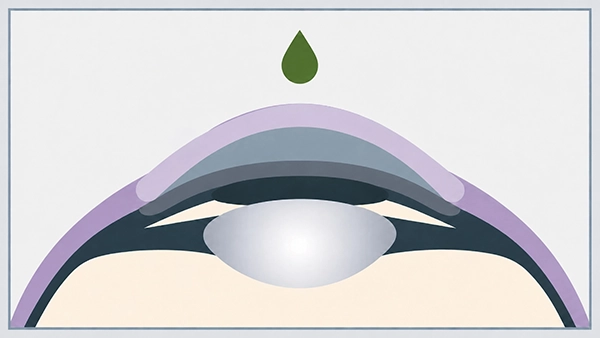
Over very small cuts on the edge of the cornea, the surgeon reaches the anterior eye chamber. These accesses are self-sealing, so that no seam is required. Through the cuts, fine instruments and fluid are introduced into the eye.
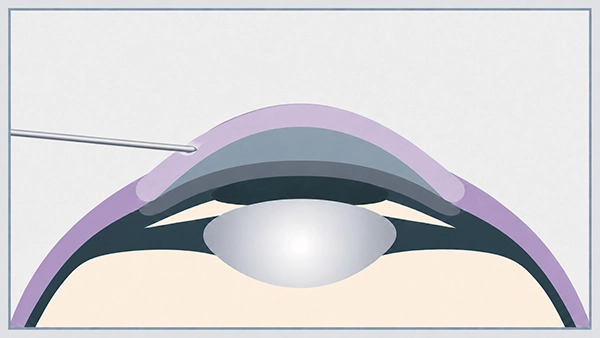
The natural lens lies in a wafer-thin capsule, the front part of this capsule is opened circularly. The rear capsule is preserved, it later serves as a stable basis for the artificial lens.
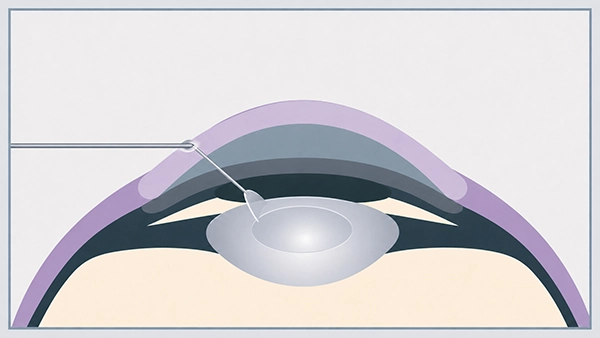
The natural lens is ground with ultrasound and sucked off. This step is known from cataract surgery: since the lens is often clearer and less hardened in the RLE procedure than in an advanced cataract, the operation can be technically different than in a late cataract.
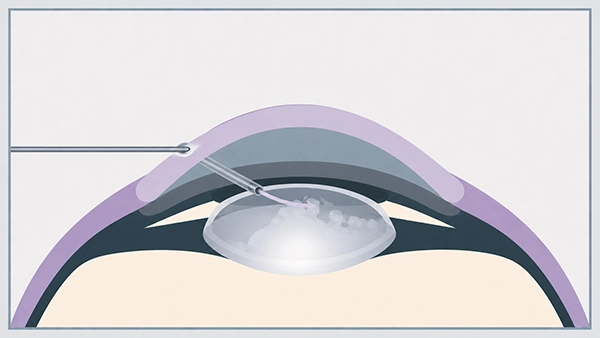
The folded artificial lens is introduced into the eye through the small access and unfolds in the lens capsule. There it will be permanently stable, which is not noticeable. Protective gel and liquid are then removed, the tightness of the cuts is checked and the eye is protected for the first healing phase.
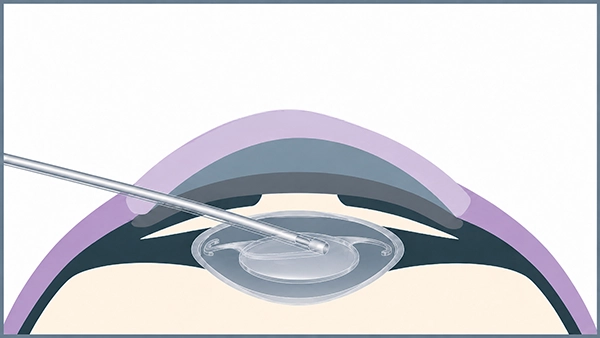
The operation of a refractive lens exchange is similar to a modern cataract operation, with which YOUSEE has great experience in cooperation with the IROC eye clinic. The procedure is carried out under sterile conditions, usually with local anesthesia by drops; each according to the situation, additional measures for calming or anesthesia may be useful. You lie on your back during the operation, the eye is disinfected and covered with a sterile cloth. A small eyelid prevents you from blinking accidentally.
For your safety we operate not both eyes on the same day. Complications are very rare, but if they occur, they affect only one eye.
In about 15 to 20% of cases, a small optical residual vision error remains after a refractive lens exchange, but this can usually be easily corrected by an eye laser surgery. In order to have stable conditions, you have to wait for the healing phase of about two months after performing the RLE until you can perform this fine tuning.
If the lens exchange has taken place at the YOUSEE or in the IROC, this additional required eye laser surgery for glasses freedom is included in the price.
During the treatment we talk to you and guide you through the steps.
After the OP you can relax with us, we will discuss the aftercare again.
We’ll then arrange your first follow-up appointment, and we’ll also give you an emergency number that you can use to contact us at any time.
As your vision may still be a little blurred immediately after refractive lens replacement, we recommend that you arrange for someone to collect you or that you are accompanied by someone.
On the day of the operation, it is normal if the eyes are a little tear, burning or feeling foreign:
pain usually does not occur thanks to the gentle procedure.
At home, you ideally rest with your eyes closed. Many patients can already see amazingly well in the evening or the next morning at the latest.
The benefit of the RLE method lies primarily in less dependence on progressive lenses or contact lenses and in a stable lens correction. This faces rare but relevant risks: infection, inflammation, retinal complications, residual defective vision, light phenomena and possible loss of contrast vision.
The possible benefit of an RLE procedure is obvious: less dependence on progressive lenses or contact lenses, more stable correction of defective vision, no later cataract development in the distant natural lens and a vision concept that can be more adapted to personal everyday life: a better quality of life in everyday life.
At the same time, a refractive lens exchange is not a cosmetic measure: it is an operation inside a healthy or only slightly altered eye. It therefore goes without saying that we also discuss the risks.
Relevant risks include infections in the eye, inflammatory reactions, bleeding, pressure increases, swelling of the retinal center, injuries to the lens capsule, lens misalignments, residual defects that require glasses or correction, and retinal complications up to retinal detachment. These events are very rare, but they are medically significant because they can permanently affect vision quality.
A particularly important point is the retina: people with high nearsightedness have a higher risk of retinal problems, regardless of the RLE procedure. After a lens exchange, this risk can be increased, especially in nearsighted people, so warning signs such as sudden floaters, which are small particles, fibers or compactions perceived as floating points, flashes of light or a shadow such as a curtain in the visual field should be always be clarified immediately by an ophthalmologist.
Even without serious complications, side effects can be disturbing: these include blurred vision in the early healing phase, dry or irritated eyes, glare, halos, star bursts, ghosting, i.e. a slight double image, or a subjectively weaker contrast perception. Especially multifocal and trifocal lenses can allow for more eyeglass independence, but more often require a neurovisual habituation: the brain must learn to classify the new optical information. For some people this succeeds quickly, for others it takes months and for a few the dissatisfaction remains so strong that further measures have to be discussed.
Another possible late consequence is the so-called afterstar (medical posterior capsule opacification). It is not the artificial lens that clouds, but the rear lens capsule, which has been left in the eye. This can lead to foggy vision months or years later and is often treated with a short laser procedure. This is usually uncomplicated, but is also a medical intervention with its own indication.
It is therefore important for us to clarify the question together with you: Is the expected benefit for you large enough to justify the residual risk of an intraocular intervention? If someone with progressive lenses does well, does not have high vision defects and expects maximum contrast quality, waiting may be the more reasonable decision. If, on the other hand, presbyopia, high farsightedness or incipient lens changes heavily burden everyday life, a refractive lens exchange after careful diagnosis can be a useful option.
Risk number for classification: the patient guide of the Royal College of Ophthalmologists states for refractive lens exchange, i.e. RLE has a magnitude of about 1 in 500 patients with permanently serious vision loss. This figure is not an individual prediction and cannot be automatically transferred to each centre, risk profile and surgical technique. At YOUSEE you benefit from our many years of experience and many thousands of operations that each of our doctors has performed.
Refractive lens exchange can significantly reduce eyeglass dependence, but does not guarantee unlimited freedom of glasses in every situation.
Decisive are lens type, retinal and corneal findings, pupil size, contrast vision and personal vision habits. Sometimes glasses for small lettering, night driving or special activities remain useful.
A good result after a refractive lens exchange does not necessarily mean to see optimally in every situation and under every light condition without glasses, realistic is an individually planned visual profile. In the case of a monofocal strategy distance can be very good, while reading still requires glasses. In EDOF or multifocal lenses glasses dependence can decrease significantly, but contrast, light phenomena and close-up comfort must be deliberately considered.
It is therefore important for us to examine your eyes thoroughly and comprehensively on the one hand, but on the other hand to discuss various everyday situations with you:
Can I drive safely and comfortably at night?
How important is reading small font without additional glasses?
How much time do I spend on the screen?
Am I ready to accept possible halos or glare?
Would an occasional reading glasses be acceptable to me if the optical clarity Is it higher for that?
Would a small residual defect disturb me greatly?
These questions are crucial for choosing the right lens.
Even though the eye recovers quickly, medical check-ups following RLE surgery are indispensable: follow-up care involves checking healing, visual acuity, intraocular pressure, signs of inflammation and the position of the lens. Sudden pain, visual deterioration, flashes of light, new floaters or a shadow in the visual field should be clarified immediately.
Aftercare is an integral part of the refractive lens exchange:
even if the operation has gone well and the eye recovers quickly, some problems can only be recognized safely and above all in time by a medical check.
Therefore, aftercare appointments should also be reliably perceived if the view develops as expected.
Immediately after the operation you will get anti-inflammatory and antibiotic eye drops, in the coming days also moisturizing drops are useful, especially if the eyes feel dry or irritated. The exact drip therapy depends on the finding, the development of the healing and your sensation.
In the first few days, the eye should be protected: rubbing, swimming, sauna, eye makeup, dusty environments and contact sports should only be resumed after medical approval. Driving only makes sense if visual acuity, glare sensitivity and spatial vision are sufficiently stable and the doctor has no objections.
increasing pain
clear redness
increasing sensitivity to light
suddenly deteriorating vision
many new floaters
flashes of light
a shadow or curtain in the field of view
nausea or severe headache along with eye pain
These warning signs do not automatically mean that there is a serious complication, but they should be clarified by us in a timely manner.
The RLE procedure replaces the natural lens and thus directly addresses presbyopia. The progressive lenses remain non-operative, Femto-LASIK shapes the cornea, the ICL complements the natural lens, and cataract surgery replaces a clouded lens: the best choice depends on age, findings, vision goal and risk profile.
In consultation, terms such as "lens exchange instead of progressive lenses", "Femto-LASIK in the case of presbyopia", "ICL or lens exchange" or "cataract surgery with premium lens" are often compared with each other. They describe related but non-interchangeable ways. What matters is whether the cornea, the natural lens or lens opacity is the central vision problem.
Laser eye surgery or lens replacement? Both procedures can reduce dependence on glasses or contact lenses, but they address different causes: with Femto-LASIK, the cornea is reshaped, whilst in refractive lens replacement, the natural lens is replaced with an artificial lens. Which option is most suitable depends in particular on age, presbyopia, refractive error, the condition of the cornea, the lens, the retina and personal visual habits.
| Procedure | What is changing? | Typical target audience | Strengths | Key limitations and risks |
|---|---|---|---|---|
| Progressive lenses | No surgery; multiple vision zones in the lens | People with presbyopia who are looking for a non-invasive solution | Safe, reversible, flexibly adaptable | Adaptation period, blurred peripheral vision, dependence on glasses, and, in some cases, restrictions on sport or computer work |
| RLE / refractive lens exchange | Natural lens is replaced by an artificial lens | Often people aged between about 45 and 65 who have presbyopia, long-sightedness, early signs of changes in the lens, or who would prefer to wear fewer varifocals | Can take presbyopia into account when planning the lens; no cataract of the natural lens later on | Intraocular surgery; residual risk of infection, inflammation, retinal complications, residual visual impairment, halos and loss of contrast |
| Femto-LASIK | The cornea is reshaped using a laser, whilst the natural lens is preserved | Often younger people with stable short-sightedness, long-sightedness or astigmatism | Quick recovery, no surgery inside the lens, well established for suitable eyes | Does not correct the ageing lens; presbyopia persists or continues to develop; depends on corneal thickness and corneal health |
| ICL / phakic lens | An intraocular lens is placed in front of the natural lens; the natural lens is preserved | Often younger people with severe visual impairment, when laser treatment is not the ideal option | Preserves natural accommodation; may be an option in cases of high refractive error | Intraocular surgery; presbyopia is not always cured; regular check-ups are important |
| Cataract surgery | A clouded natural lens is replaced with an artificial lens | People with cataracts and impaired vision | Medically indicated lens replacement in cases of lens opacity; choice of lens can improve visual acuity | Risks similar to those associated with lens surgery; the primary aim is to treat the clouding, not simply to eliminate the need for spectacles |
Femto-LASIK and refractive lens exchange both aim to reduce dependence on glasses or contact lenses, but medically they are very different procedures.
In Femto-LASIK, the cornea is changed with a laser so that light falls back on the retina, the natural lens remains in the eye. The method is particularly suitable for stable nearsightedness, farsightedness or corneal curvature and is often considered in younger patients.
In the RLE procedure, on the other hand, the natural lens is replaced and thus the presbyopia can be directly included in the planning. This advantage is particularly relevant for people in whom the lens is already the central limiting factor. At the same time, the refractive lens exchange is more invasive than a pure corneal laser treatment, because surgery is performed inside the eye. For this reason, the indication is more stringent and
enlightenment more fully.
In short: Femto-LASIK shapes the cornea, RLE replaces the lens. Which path makes more sense depends on age, defective vision, cornea, lens, retina, everyday life and risk profile.
Alternatives to the RLE method are, depending on the findings, progressive lenses, contact lenses, monovision, Femto-LASIK, Trans-PRK, ICL or deliberate waiting.
A good recommendation compares not only visual acuity, but also safety, reversibility, presbyopia, retinal risk, contrast vision and long-term aftercare.
For some people, progressive lenses remain the safest and most practical solution, others benefit from contact lenses, monovision with contact lenses, a laser treatment of the cornea or an additional lens. Even conscious waiting can be right if the natural lens is still clear, the complaints are well correctable and the benefit of an operation does not clearly outweigh.
Serious advice should not only mention these alternatives, but actively compare them with the RLE procedure. Precisely because the procedure is irreversible, the natural lens can not be reinstated, the decision should be made after comprehensive clarification, at rest and without time pressure.
Technically, refractive lens swapping is very similar to modern cataract surgery because the natural lens is removed and replaced by an artificial lens. The difference lies in the reason: In the cataract operation, the lens is clouded, in the RLE procedure the correction is of defective vision and presbyopia in the foreground.
Refractive lens swapping cannot restore declining accommodation because an artificial lens is not a young natural lens either. Depending on the lens type, however, the method can create a visual profile which covers distance, intermediate region and proximity better without progressive lenses. How well this succeeds depends greatly on the lens choice and the eye findings.
No. No serious center can guarantee complete freedom from eyeglasses: Many patients require glasses much less often after the refractive lens exchange, but some still need them for certain activities, such as very small font, long reading, screen work or driving at night.
The best lens is the one that fits your eyes and your everyday life. Monofocal lenses often provide the clearest optical quality in a main distance, multifocal or trifocal lenses can provide more eyeglass independence, but are more likely to bring halos, glare and contrast compromises. EDOF lenses are often in between, but are also not compromise-free.
Halos, glare, starbursts or shadow images can occur after refractive lens exchange, more frequently in multifocal and trifocal lenses than in monofocal lenses. Many people get used to it, but for some they remain disturbing: For example, those who drive a lot at night or are very sensitive to light phenomena should definitely discuss this point with us.
Severe, permanent vision loss is extremely rare, but not impossible. Infections, retinal detachments, bleeding or severe inflammation can threaten vision. We further minimize this risk through careful preliminary examination, sterile surgery, realistic indication and consistent follow-up care, and you benefit from our decades of experience with these operations.
Many light activities are possible again after a short recovery time, but the exact time depends on occupation, healing course, lens type, vision changes and medical check-up. Screen work, driving, physically stressful work or activities in a dusty environment should be discussed individually with us.
No. The natural lens, which could later develop a cataract, is removed during refractive lens swapping. However, after the RLE procedure, an afterstar can occur, i.e. a clouding of the posterior lens capsule: this affects about 20% of patients and is possibly treated with a laser. If you have had the RLE operation performed at YOUSEE or IROC, this second procedure is included in the price.
The natural lens cannot be reinserted after removal during the refractive lens exchange. An artificial lens can be replaced or repositioned in certain situations, but this is another procedure inside the eye and not with a simple Equate return to baseline.
A modern intraocular lens is designed to remain in the eye permanently and does not wear out like a contact lens. The natural lens that has been removed can no longer develop cataracts. However, months or years later, the posterior lens capsule may become cloudy; this is called a secondary cataract and can often be treated with a brief laser procedure if necessary. The ophthalmologist will decide whether and when a follow-up examination or treatment is advisable based on the individual findings.
