Costs, financing, and frequently asked questions
Laser eye surgery offers you the chance to live without glasses or contact lenses, but what are the costs involved?
On this page, you can find out what prices you can expect for the different procedures at our laser eye surgery centers in Düsseldorf, Basel, Bern & Zurich and what the costs depend on.
We show you what is included in the price, how billing according to the GOÄ (German Medical Fee Schedule)
ensures transparency, and what financing options are available.
We also compare the costs of laser eye surgery with the long-term expenses for glasses or contact lenses:
When does laser surgery pay off?
Another important point is the cost comparison between Germany and other countries: We explain why laser eye surgery in Turkey and other countries is only cheaper at first glance.
Finally, we answer frequently asked questions (FAQ) about prices, health insurance, tax deductions, and more.
The information on prices, installment payments, and health insurance companies is not identical in Germany and Switzerland: sections that only apply to one country are marked accordingly. If you are unsure which information applies to your location, please feel free to contact us.
Cost overview:
Laser eye surgery procedures and their prices
The cost of laser eye surgery can vary depending on country, procedure and individual findings.
If you would like to have surgery in Switzerland, you can find the prices for Basel, Bern, and Zurich here.
If you would like to visit YOUSEE in Düsseldorf, the prices listed here apply.
Our offer includes the costs for
Preliminary examination
Operating costs
Follow-up examinations in the first 3 months (6 for Trans-PRK)
We offer a 5-year warranty if you take advantage of our annual inspections.
Financing: Laser eye surgery by installment payment in Germany
Laser eye surgery costs are a one-time expense, but at YOUSEE we also offer convenient financing and installment payment plans so that you can spread out your payments flexibly. If you do not want to pay the entire amount at once, the following options are available:
We work with established financing partners to provide you with a quick and easy process. You can apply either directly with us or online via a financing application.
After a credit check, you will quickly and easily find out whether financing is possible.
- •
Installment payments up to 12 months: 0% financing
- •
Installment payment from 13 months: 7.95% interest
- •
Maximum term: 48 months
- •
Flexible down payment is possible
Financing: Laser eye surgery by installment payment in Switzerland
YOUSEE helps you with financing:
We offer installment payments through mediserv AG: The minimum monthly installment is CHF 65, and he maximum term is 24 months. Installment payments of up to 4 months are interest-free, after which an annual interest rate of 10.9% is charged. A one-time processing fee of CHF 15 is always charged. Please note that a credit check will be carried out as a matter of priority.
As a borrower, you must be at least 18 years old, have health insurance in Switzerland, and have been living in Switzerland for at least 3 years.
Hidden costs?
Not with us.
All treatment costs are billed according to the German Scale of Medical Fees (GOÄ). The GOÄ is a legally regulated fee schedule in Germany that
ensures that medical services are billed uniformly and transparently. For you as a patient, this means that the items on the invoice (e.g., preliminary examination, laser procedure, check-ups) are listed according to fixed fee scales. This prevents arbitrarily
inflated prices: you only pay for services that are actually provided.
Billing according to GOÄ:
What does this mean for our patients in Germany?
Our philosophy is transparency:
There are no hidden costs with us.
The necessary follow-up checks in the first three months (up to six months for Trans-PRK) are included, but we are of course also available to you later on. In the rare event that follow-up treatment, i.e. a second laser correction, is necessary, you will of course not incur any additional costs.
Once everything has healed well, we recommend our annual check-ups. These are charged separately and cost €150.
GOÄ billing is particularly common with private health insurance companies, as they check reimbursements based on GOÄ numbers.
But the GOÄ also provides guidance for self-payers.
This way, you know exactly what costs you will incur.
What does Swiss health insurance cover?

Under certain circumstances, your health insurance provider is obligated to contribute to the cost of your laser eye surgery at YOUSEE:
Nevertheless, some insurers state that they do not provide coverage for laser eye corrections, so it is worth taking a closer look.
We have compiled an overview showing when your health insurance company will contribute and which supplementary insurance policies are advisable.
Swiss basic health insurance
Everyone in Switzerland has it: basic health insurance. It helps you finance laser eye surgery, but only in rare exceptional cases.
Specifically, your health insurance company will reimburse you for laser eye surgery “after special approval” by your medical examiner. This means that your ophthalmologist must prepare a report stating that the procedure is medically necessary in your case.
The health insurance company will then make a decision after consulting and assessing your medical examiner. Even if your decision is positive, basic insurance often only covers the correction of one eye to a level that can be achieved with glasses.
Since basic insurance only covers the costs of laser eye surgery in very rare exceptional cases, it is worth looking into supplementary insurance.
Overview of additional benefits offered by
Swiss health insurance companies
Our current overview shows you which health insurance companies offer cost sharing for laser eye surgery and which supplementary insurance models they offer. This information is provided free of charge by us. As health insurance benefits are subject to change, we would be grateful if you could let us know if you notice any information that is no longer up to date.
As of January 2026
Helsana
The Completa Plus supplementary insurance covers up to CHF 500 for laser eye surgery per eye and calendar year.
Please note that the supplementary insurance must be taken out at least one year before the laser eye surgery.
The Completa Extra supplementary insurance covers up to CHF 750 per eye. However, this supplementary insurance can no longer be taken out.
Click here for the Helasana customer login and here to their contact form.
Atupri
The supplementary insurance Mivita Extensa contributes a maximum of CHF 1,000 to the costs of your laser eye treatment.
The Intense supplementary insurance covers a maximum of CHF 1,500.
The insurance must be taken out at least one year before the procedure and can only be claimed once every five years.
Click here to go to the Atupri customer area and here to their contact form.
CSS-Insurance
With the supplementary insurance myFlex Balance, CSS pays CHF 150 per calendar year, and with myFlex Premium, it contributes CHF 300 toward your laser eye surgery, also per calendar year.
With the supplementary insurance Livo Top Balance and Premium, CSS covers a maximum of CHF 1,000 per insured person for laser eye surgery.
In any case, CSS recommends that its customers contact a contact center, as the health insurance company monitors how medical services are modernizing and continuously adapts its insurance offerings.
Click here for the CSS customer login and here to its contact form.
Concordia
From the age of 21 to the age of 50, DIVERSAcare will contribute a maximum of 400 Swiss francs and DIVERSApremium a maximum of 600 Swiss francs towards your laser eye surgery.
Please note that the supplementary insurance must have been taken out at least one year before the procedure and that it only pays out once every five years.
Click here to go to the Concordia customer area and here to their contact form.
Groupe Mutuel
The PREMIUM supplementary insurance covers up to CHF 800 of the costs of laser eye surgery. You can take out PREMIUM supplementary insurance up to the age of 70 and are insured immediately from the start of the contract.
If you have GLOBAL GEM or GLOBAL CORPORATE supplementary insurance through your employer, a maximum of CHF 800 is covered every three years.
If you have GLOBAL GEM or GLOBAL CORPORATE supplementary insurance through your employer, a maximum of CHF 800 is covered every three years.
Click here to go to the Groupe Mutuel customer area and here to their contact form.
KPT
The Pulse Premium supplementary insurance covers up to CHF 600 of your laser eye surgery costs.
The costs are covered once per eye and you must take out the insurance at least one year before the procedure.
KPT recommends that its customers clarify their insurance coverage in advance.
Click here to go to the KPT customer area and here to their contact form.
SWICA
The supplementary insurance plans Completa Top and Completa Forte cover up to 90%, but a maximum of CHF 500, of your laser eye surgery per eye.
Optima also covers up to 90%, but a maximum of CHF 1,500 per eye.
If you have both supplementary insurance plans, you will receive up to CHF 2,000 per eye.
SWICA recommends that its customers contact them directly for written confirmation of their benefit entitlement.
Click here to go to the SWICA customer area and here to their contact form.
Assura
The supplementary insurance plans Complementa Extra and Complementa Maxi cover CHF 100 per calendar year for your laser eye surgery. If you do not claim any benefits in a given year, this amount accumulates annually up to a maximum of CHF 500.
The reimbursement percentage varies depending on the deductible chosen for the compulsory health insurance (OKP).
It is important to take out supplementary insurance before your laser eye surgery.
Click here to go to the Assura customer area and here to the contact form.
Visana does not offer coverage through supplementary insurance. If you cannot find your health insurance provider in our overview, we recommend contacting them by email or phone to clarify which supplementary insurance policies they offer in connection with laser eye surgery. But no matter how much your insurer pays, YOUSEE offers you top quality and prices that are easy on your budget.
What is included in the price? Services & aftercare:
Preliminary examination & consultation
Our preliminary examination is particularly thorough and comprehensive. This is the only way we can guarantee outstanding results. We also set aside plenty of time for consultation and your questions. At YOUSEE, the brief examination to determine your suitability is free of charge*, and the preliminary medical examination is included in the surgery costs.
* Free consultation by our trained, non-medical specialist staff.
Your laser eye surgery
YOUSEE uses only the most advanced laser technologies.
Doctors & Staff
An experienced ophthalmologist performs the procedure with the assistance of our specialist staff. Our expertise and care are also factored into the cost.
Follow-up appointments
After laser treatment, depending on the method used, several follow-up appointments are necessary. These are included in the price, as are medication and eye drops for the first few days after the operation. At YOUSEE, we provide you with personalized, close support and are of course available to offer advice and assistance at any time, even outside of your follow-up appointments.
Why do all the procedures have different prices?
Despite the price differences, the following applies:
All procedures aim to enable you to live without visual aids. There is no single best method, but there is the best
procedure for you: Together we will find it.
The price should only be one of several criteria.
The differences in price between the processes are mainly due to the technical complexity involved:
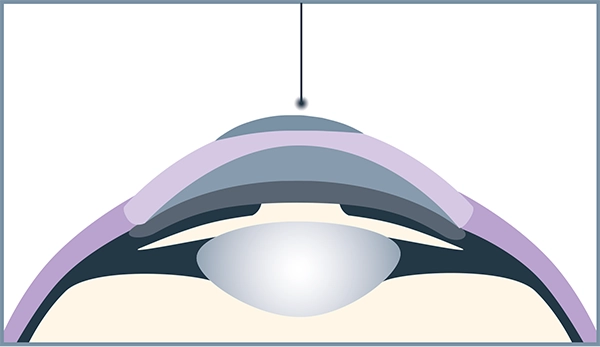
Only an excimer laser is used in Trans-PRK, making this method the most cost-effective.
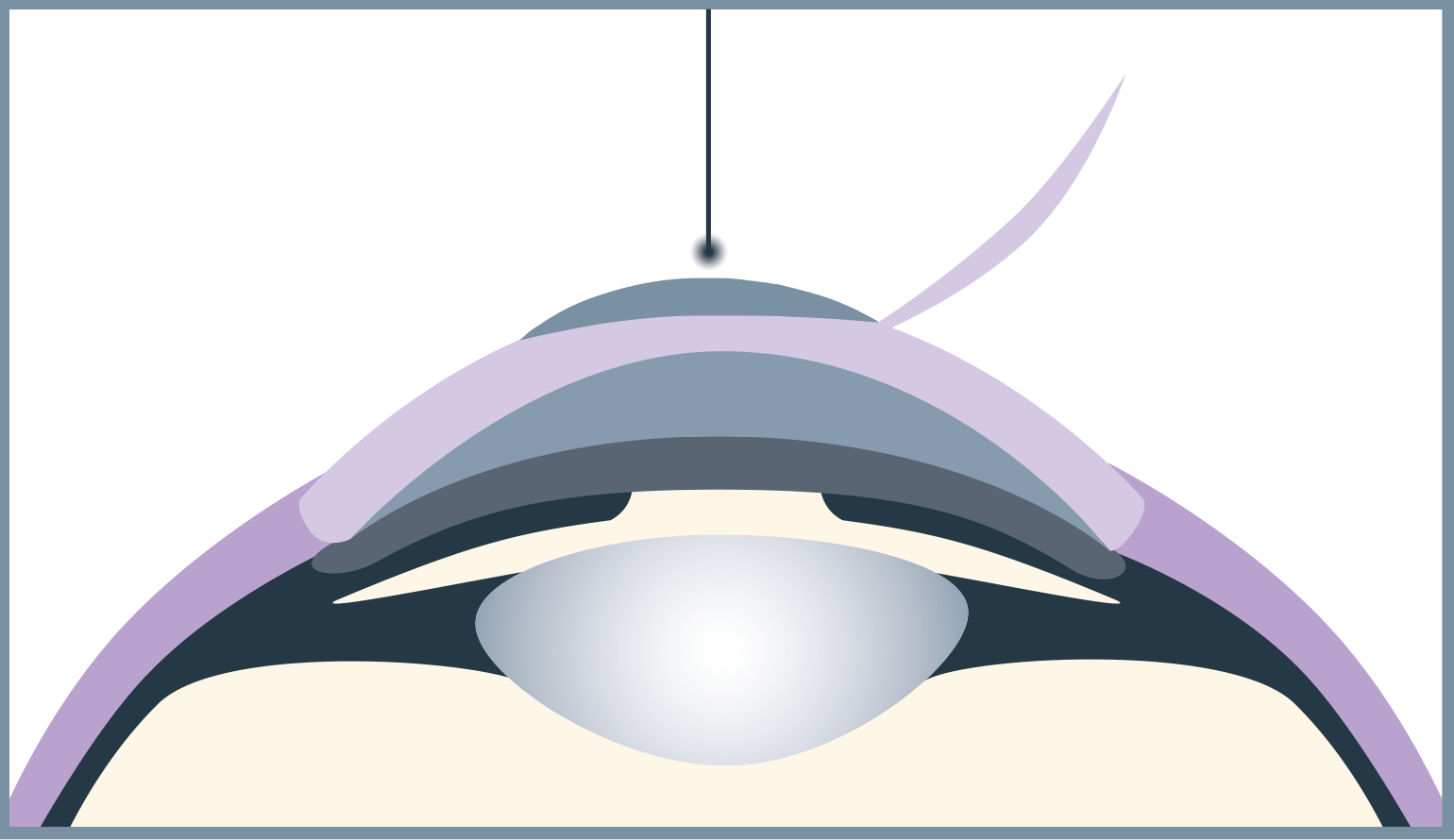
Femto-LASIK requires two lasers, the femtosecond laser and the excimer laser, which results in higher equipment costs.
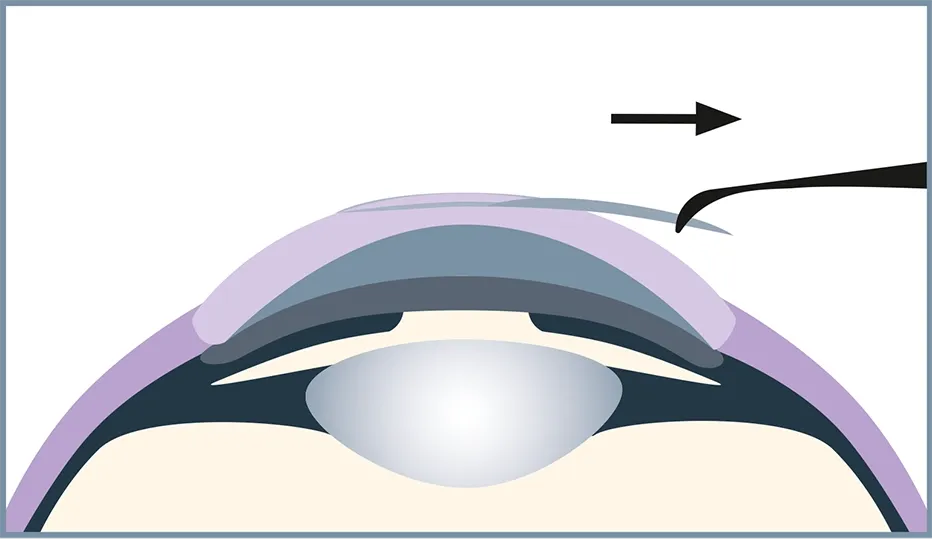
The KLEx (SMILE) method uses a special state-of-the-art femtosecond laser to prepare the lenticule. This technology is expensive to purchase and maintain and requires a highly experienced surgeon, which explains the higher price.
Laser eye surgery in your hometown vs. abroad:
Why cheap can often turn out to be expensive
You often hear and read about laser treatments abroad, especially laser eye surgery in Turkey (e.g. in Istanbul), which is popular because
the all-inclusive prices are very low.
This sounds like impressive savings compared to your home country, but be careful:
Cheap is not always better, especially when it comes to something as valuable as your eyes.
Here are a few reasons why you should be cautious about supposedly cheap offers abroad:
Preliminary examination and follow-up treatment
A successful laser eye surgery involves a detailed preliminary examination, including an informative consultation with time for questions and, depending on the procedure, various follow-up appointments spread over several weeks.
However, continuous follow-up care is often not possible for procedures performed abroad, because you can't just fly to Istanbul for every check-up. In most cases, only a brief check-up is performed the day after the laser surgery, then patients fly home and are left to their own devices for the
rest of the healing process.
This means that problems may go unnoticed or be detected too late. At YOUSEE, on the other hand, follow-up checks are part of
the laser eye surgery, and we are of course also available for you at any time outside of the agreed appointments.
Quality and safety standards
Germany and Switzerland have very strict hygiene regulations and high qualification requirements for surgeons.
The German Ophthalmological Society warns that hygiene standards may sometimes be inadequate abroad, medical equipment may be outdated, and doctors may be insufficiently qualified.
This can increase the risk of complications. Of course, there are also excellent clinics abroad, but it is not always easy to assess this in advance.
Language and legal barriers
The language barrier can be an issue abroad, and it is particularly important to understand everything clearly and be able to ask questions when it comes to medical details. When abroad, communication in German or English is not always guaranteed.
If serious problems arise and a dispute occurs, you would have to take legal action against the clinic abroad. Jurisdiction lies with the location of the clinic, which makes it difficult to enforce claims.
Hidden additional costs
The advertised prices abroad do not always include everything: for example, follow-up treatments are often not included in the price.
So if a correction or complication treatment becomes necessary, you may have to pay extra for it. This can result in double treatment costs in the end.
In addition, there are travel and, if applicable, hotel costs: A vacation package with surgery may seem inexpensive, but when you add in flights, accommodation, meals, and transfers, the price advantage quickly disappears.
The supposed savings are therefore often deceptive.
The DOG, the Deutsche Ophthalmologische Gesellschaft, also emphasizes that such offers are only cheap at first glance. If a patient needs follow-up treatment due to complications, for example, they will ultimately end up paying more (source: mt-portal.de).
In the worst case, poor quality can also lead to permanent damage to the eye, a risk that is minimal in Germany at qualified centers.
Conclusion:
Laser eye surgery is a medical procedure performed on a central sensory organ.
At YOUSEE, we place the highest value on safety, quality, and care, and our prices reflect these services.
The procedure itself may be cheaper abroad, but you also forego comprehensive local care. When you add everything up, the price difference is often smaller than you might think, and the peace of mind that comes with having a dedicated contact person close to home is priceless.
Is laser eye surgery worth it?
A cost comparison
with glasses and contact lenses
Laser eye surgery is an investment, but when you consider the long-term costs of glasses or contact lenses, the amount quickly becomes relative. Many of our patients are surprised to discover that they have already spent a similar amount (or more) on vision aids over the years.
Let's take a look at a cost comparison:
Glasses
High-quality designer glasses (anti-reflective, thin lenses, modern frames) can easily cost €500 or more. In addition to their main glasses, many people also need prescription sunglasses, possibly a spare pair of glasses, or special sports glasses. Even if you only buy new glasses (plus sunglasses) every two years, this adds up to around €5,000 in 10 years, or €10,000 in 20 years.
The cost of glasses is not the only expense.
Contact lenses
Contact lenses are also not cheap: high-quality lenses plus care products cost around €300 to 600 per year, depending on the type of lens. That's approximately €3,000 to €6,000 over 10 years, and twice as much over 20 years. In addition, most lens wearers also have glasses as a backup, which adds to the cost. In short, those who start using vision aids early on can easily spend a five-figure sum on glasses and lenses by middle age.
Laser eye surgery
On the other hand, there is the one-time cost of laser eye surgery. Let's assume you
decide to have laser treatment at around the age of 30. Depending on the
method, the cost ranges from €1,600 to €3,900 (for both eyes).
In return, you will be free of glasses and contact lens costs for the next few decades. Even
by conservative estimates, laser eye surgery often pays for itself after just 5 to 7 years.
Sample calculation
Our Trans-PRK for both eyes (€1,580 total) would pay for itself in less than 5 years compared to the 5-year requirement for new glasses.
But even a higher-priced Femto-LASIK (€2,580 in total) pays for itself within approximately 7 years compared to the cost of contact lenses.
With the premium KLEx procedure (€3,780 for both eyes), the break-even point may be 8 years, but even after that, you will save money.
Better quality of life
In addition to the pure figures, there are intangible benefits that are difficult to quantify in euros: quality of life and comfort. No more annoying glasses on your nose, no fogging up, no restrictions when playing sports. No ongoing costs for lenses and
care products, no foreign body sensation in the eye. Many patients report that they do not regret their decision for a second. On the contrary, we often hear:
“I wish I had done it sooner!”
Fewer complications
“We compared the risk of complications from laser eye surgery with the risk of long-term contact lens wear: after just three years, the figures are similar, and after that, the risk for contact lens wearers is even higher, for example if wearing the lenses for too long leads to infection or inflammation in the eye.”
(Prof. Theo G. Seiler, MD, FEBO Ophthalmologist FMH)
FAQ: Frequently asked questions about laser eye surgery costs
Finally, we will answer some frequently asked questions about the costs of laser eye surgery. If you have any further questions, please feel free to contact us directly.
Does health insurance cover the costs of laser eye surgery?
As a general rule, statutory health insurance providers do not cover the costs of refractive laser eye treatment, as short-sightedness, long-sightedness, and astigmatism are not legally considered to be diseases, but rather deviations within the normal range.
In exceptional cases (e.g., if a medical necessity is proven, such as intolerance to glasses and contact lenses), decisions may be made on a case-by-case basis, but this is very rare.
Private health insurance companies, on the other hand, partially reimburse the costs of laser surgery, depending on the tariff and contract. Some private health insurance companies cover the expenses in full, others up to a certain maximum amount. It is worth checking with your own insurance company in advance
and, if necessary, submitting a cost estimate.
Can I deduct the costs of my laser eye surgery from my taxes?
Yes, under certain circumstances, you can claim the costs of laser eye surgery on your taxes both in Germany & Switzerland. However, there is a
reasonable personal contribution that depends on income, i.e., only the amount that exceeds this reasonable limit is deductible. In practice, this means that for very
high incomes or comparatively low surgery costs, the tax effect may be minimal. Nevertheless, you can submit the invoice with your annual income tax adjustment.
Important: We cannot and are not permitted to provide tax advice. Whether your expenses are tax-deductible depends on your individual situation.
Are the prices quoted per eye or for both eyes?
In line with industry practice, our prices always refer to one eye, unless “both eyes” is expressly mentioned. Since in most cases both eyes are treated with laser, the total cost can be estimated as double the amount. In our price structure, for example, Femto-LASIK is estimated at €1,290 per eye, which amounts to €2,580 for both eyes.
Important: Treating both eyes in one operation is common practice and safe, and also saves time and money compared to separate treatments.
What happens if follow-up treatment is necessary?
In a small percentage
of cases, it may be
necessary to undergo
follow-up treatment
(known as enhancement
laser treatment) a few
months after the operation,
e.g. if the result does
not yet correspond to 100%
of the desired vision.
In this case, you are
With us, you are covered in this
case: within
the first year, we check
the findings and, if
medically appropriate, we perform
a follow-up laser treatment
without additional surgery costs.
It is important that you attend all
follow-up appointments
so that we can
determine in good time whether
optimization is necessary.
Outside the
warranty period or
in the event of new
vision deterioration
years later, a
repeat procedure would again
incur costs,
but such cases are
extremely rare with us.
In short: Your
satisfaction is our
top priority. If a
second procedure is necessary,
we will not abandon you
or ask you to pay again.
Is it possible to pay in installments if I cannot afford to pay the full amount at once?
Yes, we offer easy installment payment plans (see the Financing section
above). We don't want anyone to have to forego better vision for financial reasons.
Many patients take advantage of this
option to spread the cost over
convenient monthly payments.
We clarify the exact terms
on an individual basis, subject to creditworthiness.
Feel free to talk to us:
together we will find
a solution.
Why does Femto-LASIK cost more than Trans-PRK (and KLEx the most)?
The price difference is due to the technical and personnel costs of each method.
Trans-PRK is the simplest method from a technical standpoint: only the surface is treated with the excimer laser, which means that the equipment and material costs are lower and the procedure takes slightly less time.
Femto-LASIK also requires a femtosecond laser to cut the corneal flap with high precision. These lasers are very expensive to purchase and maintain, and the procedure itself is also more complex (two
steps, two lasers). Therefore, the costs for Femto-LASIK are higher.
Finally, the KLEx procedure (often known by the brand name SMILE) also uses a latest-generation femtosecond laser to prepare a lenticule inside the cornea. This technology is currently
the most advanced and is not yet widely available, which is reflected in the price. In addition, KLEx requires a little more individual planning.
In summary: The more high-tech involved and the newer the procedure, the higher the price typically is.
However, all procedures lead to the same result in terms of vision correction. In the preliminary examination, we determine the best procedure for you
and recommend which method is medically appropriate and safe.
How do I find the best deal?
The costs are an important criterion, but not the only one.
Pay particular attention to the experience and reputation of the clinic (How many laser operations have been performed? Are there recognized doctors?), the technology used (state-of-the-art
lasers?) and the care provided (do they take time for you? Is there intensive pre- and post-operative care?). An offer is good if price and performance are fairly balanced.
Feel free to get several opinions. We stand behind our work and are convinced that we can offer you a very attractive
total package at YOUSEE: High-quality medical treatment with your health in mind at a fair price. We would be happy to advise you without obligation and draw up a cost plan.
Will I incur any additional expenses besides the surgery costs?
Preliminary examination,
surgery, and
follow-up appointments in the
first few months are
included in our price.
Not included in the price
are moisturizing drops,
which are recommended after the surgery.
Our prices are low
and transparent: there are no hidden
costs with us.
Why is laser eye surgery so much cheaper abroad (e.g., Turkey)?
There are several reasons for the lower prices abroad:
The cost of living and salaries are often lower, which has an impact on surgery prices. Government subsidies for medical tourism (e.g., in Turkey) can also play a role, as can different liability and quality standards (less stringent requirements can save costs, but also carry risks). Some clinics abroad may use older equipment or perform a very high number of procedures with low margins.
They also expect that patients will not require extensive follow-up care.
In summary: Low-cost providers save money in various areas: personnel, time, service, and possibly technology, thereby pushing down prices. In Germany, on the other hand, you have high standards that you can rely on.
Our advice: When comparing offers, don't just look at the price. Cost should only be one factor,
and the question of whether you feel comfortable should also play a role in such a decision: after all, it's your eyes we're talking about.
Conclusion
The cost of laser eye surgery may seem high at first glance, but when you consider
the lifelong benefits and savings, it becomes much more relative. You are investing in
permanent sharp vision and your quality of life.
Thanks to financing, tax deductibility, and a high quality of life, this investment often
pays for itself many times over, both financially and personally. If you have any
further questions about prices and procedures, our team will be happy to
assist you.
